h1

Warner’s Safe Cure: Rescue Me!

November 24, 2009

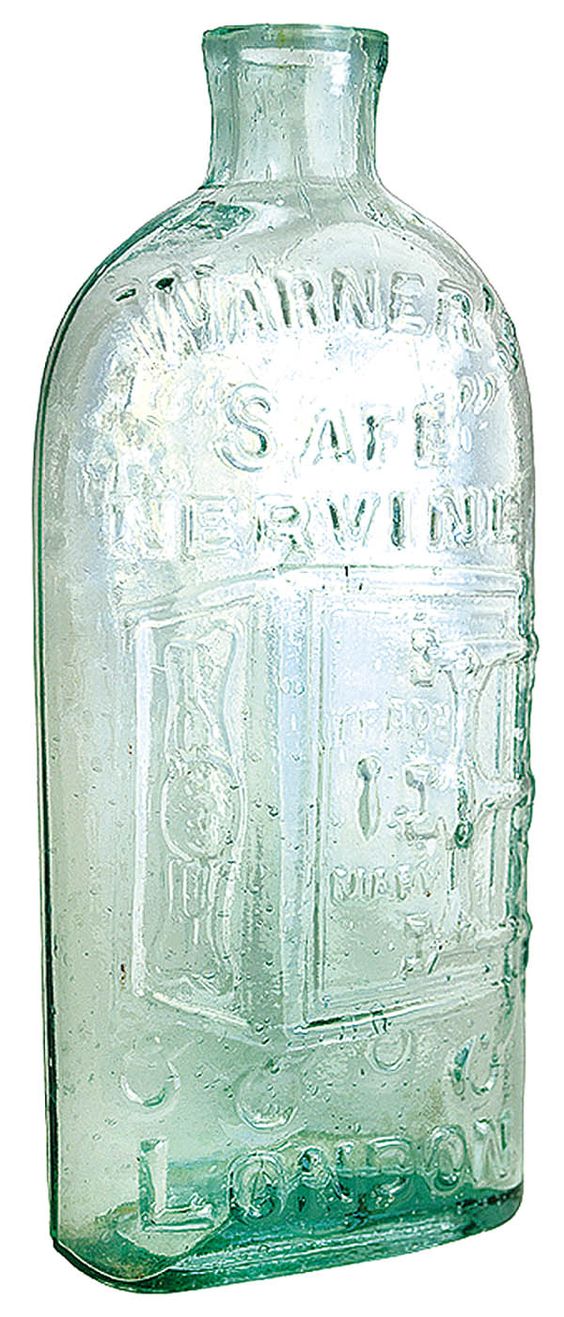
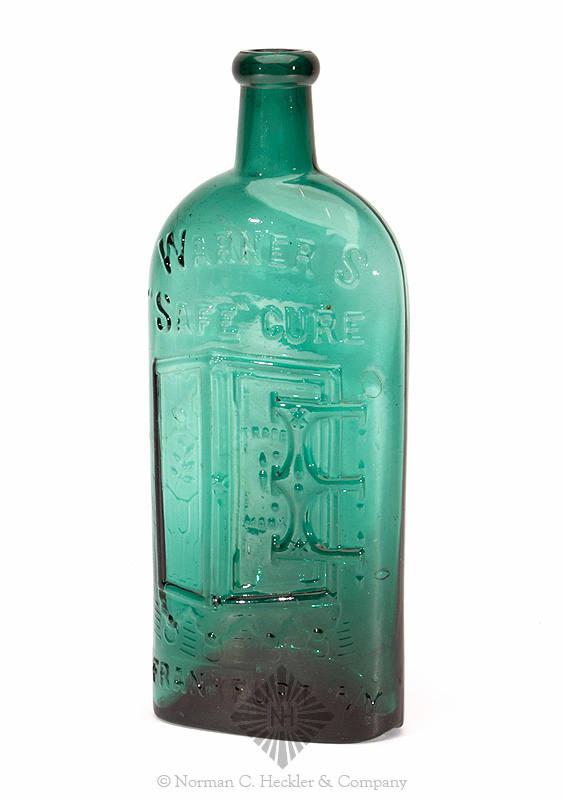
When you look at the types of patent medicines that were sold in the mid to late 19th Century, it’s hard to imagine why intelligent people would fall victim to what can be best described as fraud on a massive scale. It’s no exaggeration to suggest that most of the medicines hawked by folks like H. H. Warner had, little, if any medicinal value, and perhaps could do real harm by exposing the would-be patient to all manner of substances like mercury or cocaine. What you have to bear in mind is that medicine in the 19th Century bore little resemblence to what it is today. For starters, medical schools really did not exist. It was not until the early 1890’s that the eminent Johns Hopkins Medical School was opened. The profession of physician was taught much like a trade with no requirements for formal education or standardized course of study. In short, you were allowed to call yourself “doctor” because you wanted to. Hence, the vast majority of  “doctors” whose names appeared on patent medicines had little or no medical training and may have been altogether fictional.

With that background in mind, it is easy to understand why the average consumer in the late Victorian era would have beeen so easily swayed by the types of claims made by the makers of patent medicine. If you got sick, it was some comfort that a bottle of Safe Cure could set you straight. In essence, the more desperate you were, the more likely you were to accept the notion that all could be made right by gulping down a bottle brown liquid laced with who knows what with a little (or maybe a lot) of alcohol for good measure.

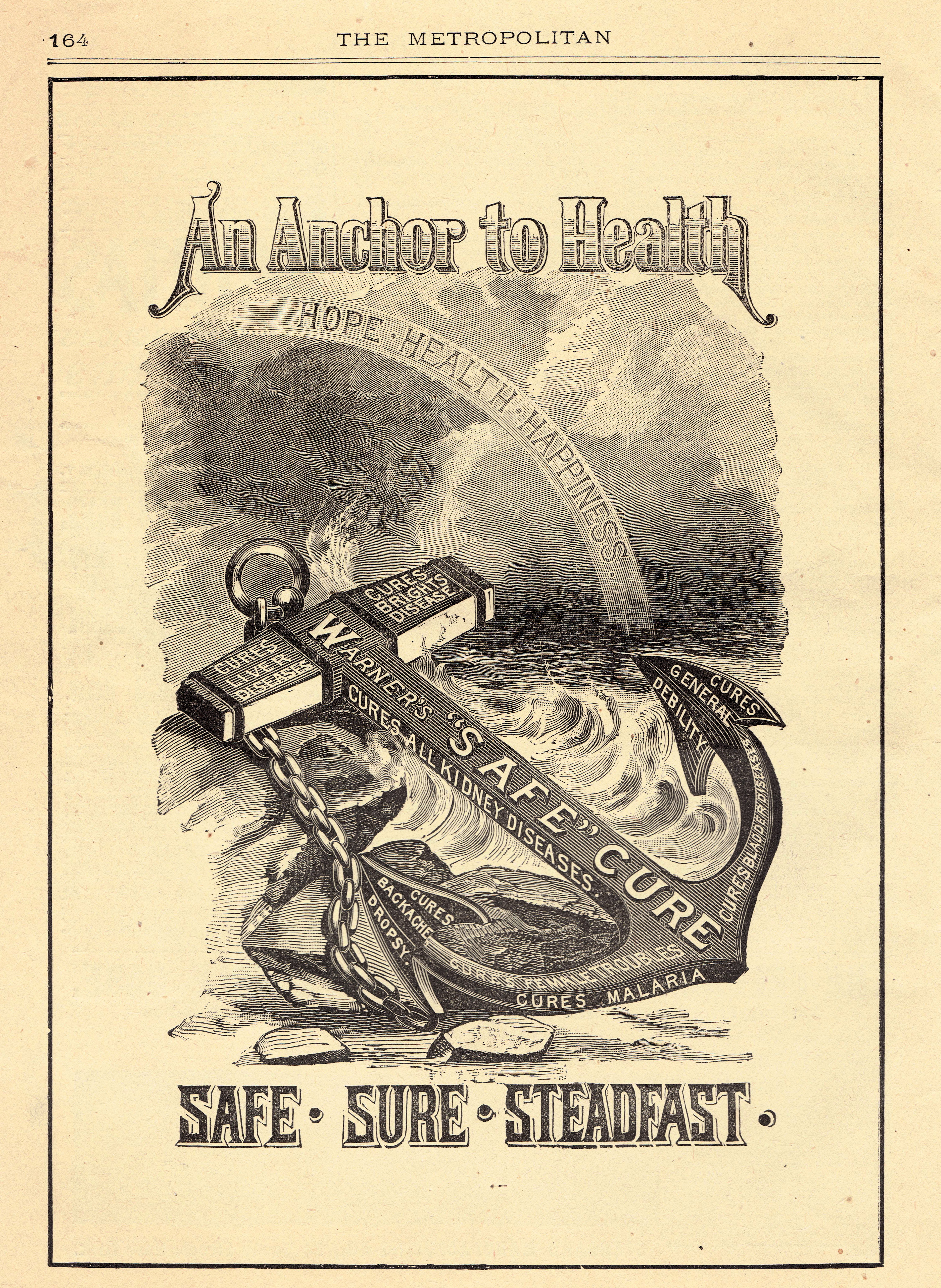
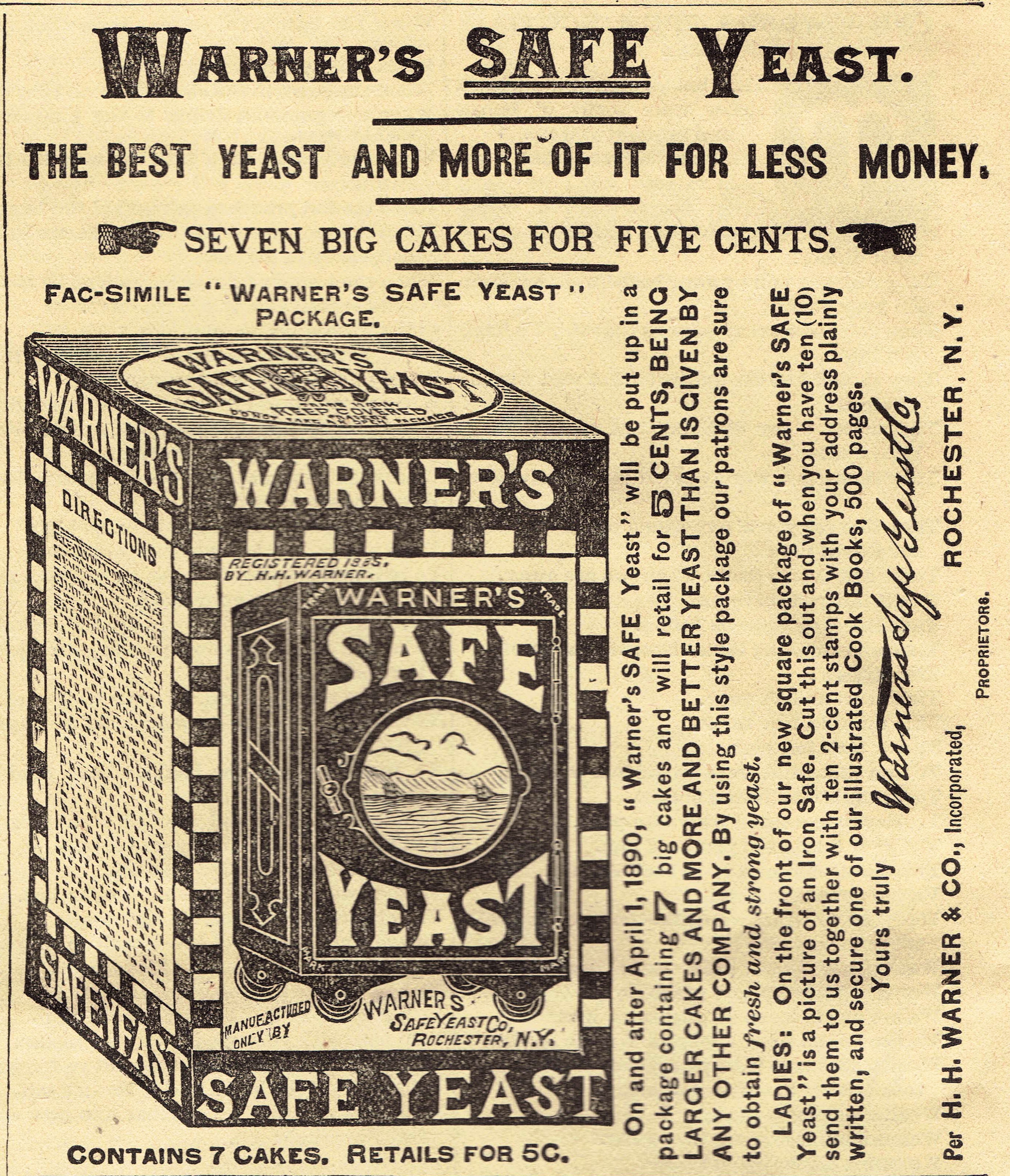
The fact that people in a desperate situation would be the most likely to accept the outrageous claims of patent medicine proprietors was not lost on H. H. Warner. Indeed, his advertising often played to the notion that his remedies offered hope to the hopeless. The advertisement at the beginning of this post is a rare British ad depicting a mother and child on a life raft adrift in rough seas attempting to flag down the HMS Reliable with a shaft of light on Warner’s Safe Cure. Below are two similar ads with the same appeal to those in peril who need rescue.

Both of these great example show Warner’s Safe Cure and Safe Yeast as a “beacon of light” to the distressed. But before you think what a bunch of dolts those Victorians were for believing such a pile of rubbish, think about how much money is spent each year in the United States on herbal remedies and miracle weight loss products. As it turns out, we may not be so far removed from our Victorian ancestors. We too are all too ready to shell out money for false hope.

h1

Warner’s Safe Cure: Labels, Labels and More Labels

November 5, 2009

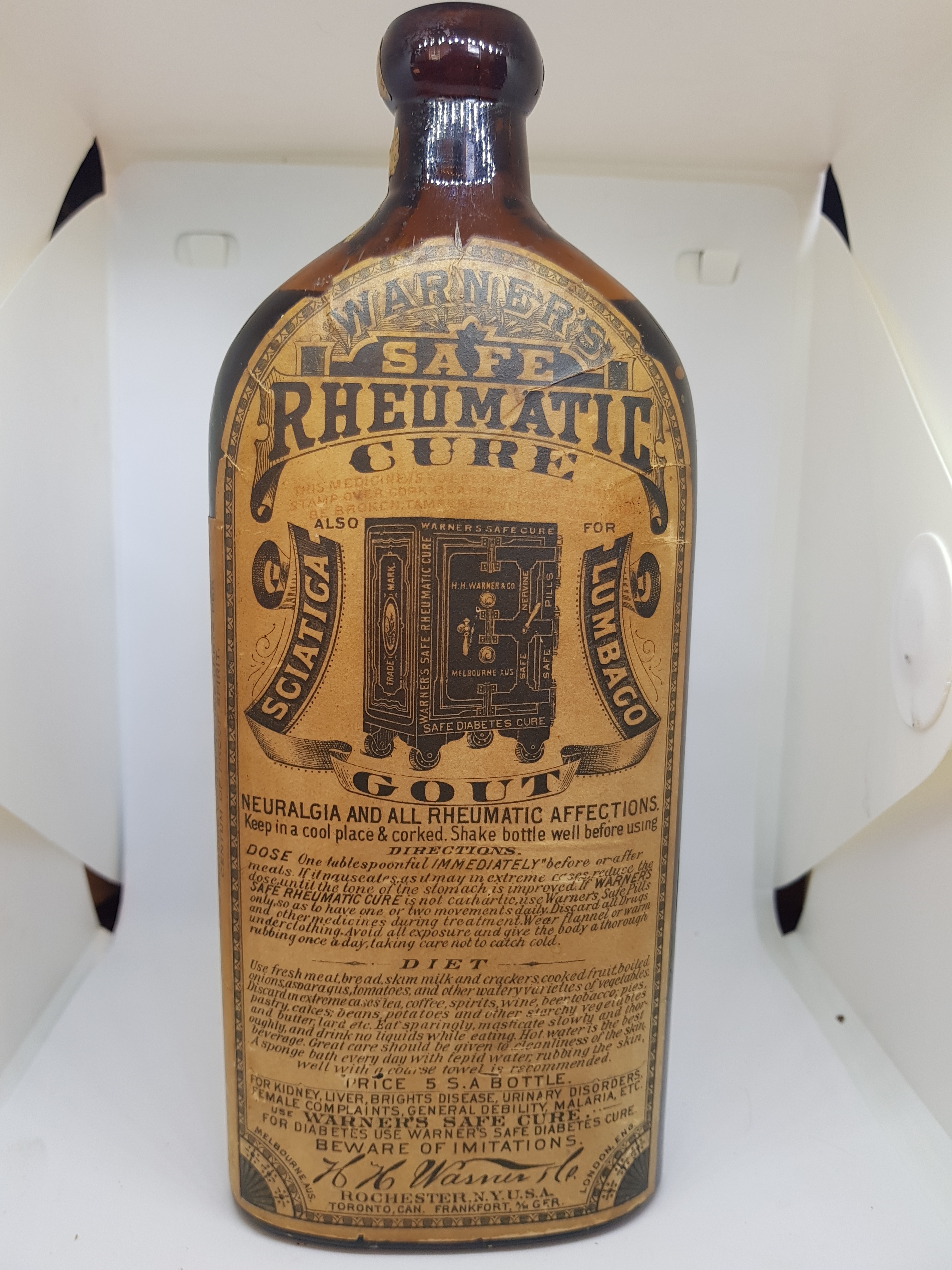
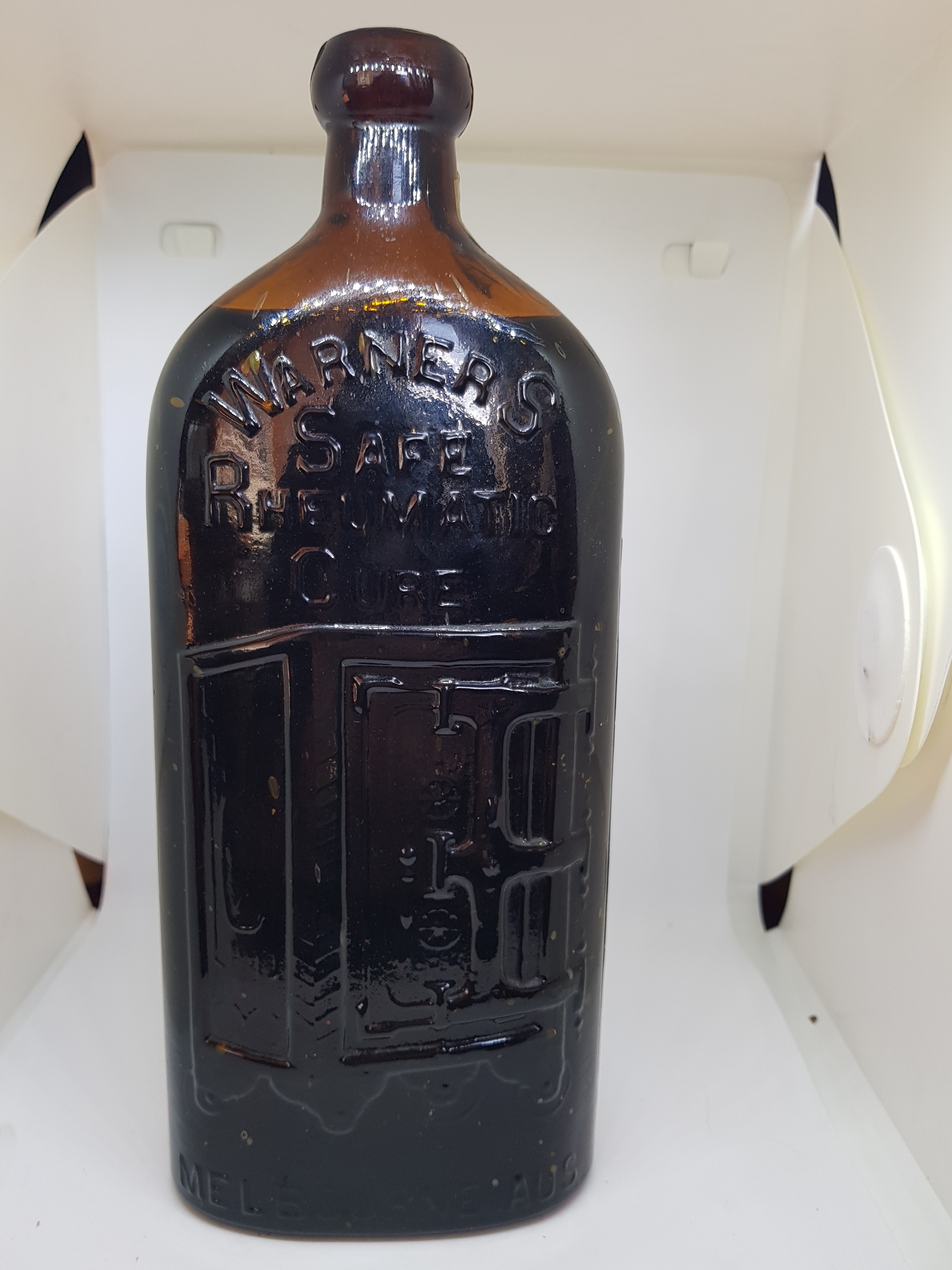
Dan Cowman Collection Dan Cowman Collection I’ve been collecting Warner’s Safe Cures for nearly 30 years and in that time, I have accumulated a few labelled  examples, actually quite a few. I was fortunate enough to get a chance to see Jack Stecher’s labelled collection back in 2001, including some of the rarest Warner’s known to exist. Many of these wonderful Warner’s showed up at what I have called the Great Warner’s Safe Cure Exhibit in 2001.

Recently, Ed Ojea shared some photos of Dan Cowman’s collection.  There may be some better collections of labelled Warner’s, but if there are, I never seen them. Take a look at these!

Dan Cowman Collection Dan Cowman Collection Dan Cowman Collection

Dan’s collection includes not only Warner’s Safe Cures and Log Cabin Remedies, but also Tippecanoes and Craig’s Cures. If this collection does not make you drool, then check your pulse. Dan originally collected Safe Cures of all types, but decided to limit his collection to labelled versions and now possesses some of the rarest varieties known. Indeed, I may have to take another look at my A-List of Rare Warner’s and add a few thanks to Dan’s collection. There are plenty more pictures of Dan’s collection, which I have uploaded to my Flikr photostream. Thanks again to Dan and to Ed Ojea. In upcoming posts, I will be highlighting more of Dan’s collection. If you have a rare Warner’s Safe Cure in your collection, send me a picture and I’ll be happy to feature it.

h1

Warner’s Log Cabin Remedies: Rose Cream

November 1, 2009

Typically, when you think of Warner’s Log Cabin Remedies, it brings to mind the familiar amber panelled bottle with, in some cases, the colorful label.  There are, however, exceptions to this rule. Undoubtedly, the most frequent is the fairly commonWarner's Log Cabin Hops & Buchu Remedy

Log Cabin Liver Pills that appear in the paper wrapped vial. There is, however, a much rarer exception, the Log Cabin Rose Cream. Never heard of it. Well, that’s not surprising given the fact that so few examples are known. Indeed, until recently, I had not seen an example.

The Metropolitan (1888)

The January, 1888 Metropolitan advertisement for Log Cabin Remedies listed the Rose Cream for “Catarrh, Etc. Elegant.” For those who don’t know, catarrh is a thick mucous discharge associated with the swelling of the mucous membranes. But I digress. I had not seen an example of this rare Warner nostrum until just recently. Enter Dan Cowman. Dan has one of the nicest collections of labelled Warners that I have ever seen. And it includes an example of the Log Cabin Rose Cream.

Warner's Log Cabin Rose CreamWarner's Log Cabin Rose CreamWarner's Log Cabin Rose Cream

Pretty nice, huh. The label says, among other things ”A Superfine Perparation for Catarrh, Rose, Cold, Hay Fever, Influenza.”  All for a mere 50 cents a bottle. Needless to say, if you can find one of these babies today, it will set you back a little more that four bits. If anyone is sitting on an example of Log Cabin Plasters, that’s one I’d still like to see.

h1

Warner’s Reference Guide Online

September 28, 2009

warners-reference-guideA little over a year ago, I reported that the Warner’s Reference Guide was going out of print. The driving force behind this publication, Ed Ojea,  decided that there was not sufficient demand to justify another run. Along with Jack Stecher,  Ed had produced this great reference to assist collectors of Warner’s Safe Cures in their quest to obtain all the varients and subvarients available and to have a sense of their relative scarcity. Although the WRG went out of print, Ed generously agreed to make photocopies available to interested collectors.

I am delighted to report that Ed has now put his guide on the internet, so that Warner’s collectors can access it without charge. Thanks to Ed for his hard work and for making this considerable work available online. The online version can be found at: http://bottlefever.wordpress.com/?p=3&preview=true

h1

What’s Going on with the Warner’s Safe Cure Blog

September 28, 2009

Warner's Safe Cure - "For Sale in All Parts of the World"

For those of you that check up on this blog on occasion, you have noticed that I have been AWOL since the end of May. For that I offer my sincerest apologies as well as an explanation. Frankly, by last spring I had blog fatigue. I had been doing the Warner’s Safe Cure Blog for over a year and was running out of ideas for new posts. I really felt like I was covering the same material in different ways and not really moving the ball. I suspect that many bloggers experience this same issue.

My response was to step back take a break. I never intended to take four months off, but between work and family commitments, the time passed faster than expected. My plan going forward is to continue to keep the WSCB up and running. It still gets a respectable number of hits each day, which is gratifying and shows that the interest in Warner’s Safe Cures remains constant. I will do occasional posts as ideas come to me and would welcome any ideas or thoughts to explore further. Thanks for your support and I hope the WSCB continues well into the future.

h1

Warner’s Safe Cure: Victorian Viagra?

May 28, 2009

Warner's Safe Cure Old Man

The advertising poster above was issued by the Warner’s Safe Cure Company in 1886. As with other classic pieces of Warner advertising, this was created by Mensing & Stecher of Rochester. The interesting thing about this ad is that the only words on it are “TAKE WARNER’S SAFE CURE.” Apart from that you have the image of an elderly gentleman accompanied by an attractive Victorian woman.

What exactly is the message being conveyed by this ad? Certainly, the benign message is that a young woman is escorting her father or grandfather, who is beset by some unknown malady, perhaps Brights Disease. Without implying that my mind is in the gutter, I would suggest that the ad attempts to convey a less benign message. Namely, that if you use Warner’s Safe Cure,  young chicks will dig you and you’ll get a spring in your step (among other places). Lest you think I may be attributing claims to Warner’s Safe Cure that were not made by the proprietor, take a gander at the Safe Cure label, which clearly says that the panacea cures, among other things, IMPOTENCY. Warner's Safe Cure Label Detail

 I rest my case.

h1

Henion’s Sure Cure for Malaria

May 17, 2009

Dr. J. B. Henion's Sure Cure for Malaria

I have only had occasion to actually see one of these rare little bottles. Appropriately enough, it was in the collection of Jack Stecher. You are immediately struck both by the wonderful blue color as well as what can only be described as a Tippecanoe lip. However, apart from the unmistakable similarity of the lip, yet another connection exists between Dr. Henion and H. H. Warner.

In the April, 1975 edition of Old Bottle Magazine, Jack published an article on Henion’s entitled “What’s a Henion’s,” which is a fair question given its rarity. It seems that Henion first appeared in the Rochester City Directory in 1873. That listing continued until  1879 listing only his name and residential address. In 1880,  the listing vanishes, only to reappear between 1881 and 1885 with Henion listed as a physician. In 1886, he is listed under Patent Medicine, but not as a physician. The final listing for Henion was in 1887, where he is again listed as a physician with the earlier address. Based on his research, Jack concluded that Henion’s Sure Cure for Malaria appeared and disappeared from the market in 1886, perhaps accounting for its rarity.

By 1886, Warner’s Safe Cure was hitting its stride with operations on two continents with expanion to a third in 1887. Jack’s research also revealed that Henion joined forces with Dr. Charles Craig and his son, William, after they left their employment with H. H. Warner, to form the Craig Kidney & Liver Cure Company also located in Rochester.

An advertisement in the Genesse County Business Directory by Dr. J. B. Henion entitled “A Great Mystery” claims all manner of cures, including one for cancer. The ad goes on that state “When I say CURE, I mean it, and NO HUMBUG!” So much for truth in advertising. It is worth noting that the ad establishes the address for Dr. J.B. Henion as No. 22 & 24 North St. Paul Street. You will recall that Warner’s Safe Remedies Building opened in 1884 on St. Paul’s Street.

Oh, by the way. If you’re interested in adding one of these rare cures to your collection, the stars have aligned. American Glass Gallery is offering one for auction as Lot No. 141, but act fast, the auction ends tomorrow.  Special thanks to Jack Stecher for the historical material on Henions and to John Pastor and American Glass Gallery for the use of their photograph.

h1

Warner’s Safe Cure: ‘Tis Health I Give to Thee

April 25, 2009

Warner's Safe Cure Advertising Poster (1888)Warner’s advertising is loaded with classical images, which range from damsels in distress to goddess-like images to battles between soldiers and marauding indians. If there is a common theme to be drawn from all of this propaganda, it might be that Warner’s Safe Cures or Safe Yeast or Tippecanoe is an elixir that helps the average man or woman beat back disease in whatever form it might take.

In 1888, Warner published what I have come to call “The Cavalier” delivering a bottle of Safe Cure to a lady with the tag line “‘Tis Health I  Give to Thee.” This image appeared on the cover of the 1888 Safe Cure almanac as well as in the form of an advertising poster (pictured above) that added the words “Warner’s Safe Cure” at the bottom.

Warner's Safe Cure Almanac (1888)

Although I have referred to it as the “Cavalier,” others have called the man delivering the gift of medicine as a pirate. Not sure which is correct, although I usually think of pirates as takers rather than givers.  I have even heard it suggested that the model for the cavalier was none other than old H. H. Warner himself. Not sure if that could ever be verified and unfortunately, the cavalier is in profile, so it is impossible to see his face. It is, nevertheless, a good story.

The identity of the woman recieving the gift of health is unknown, other than to suggest that she represents all women of the era. She does not appear to be sick or frail, so we do not know who the story ended. From Warner’s standpoint, however, the important message was that health was merely a bottle away.

h1

Warner’s Safe Cure Blog – 10,000 Hits and Counting

April 25, 2009

safedetail

When I started the Warner’s Safe Cure Blog a little over a year ago, my goal was to try to post material of interest to those who collect Warner’s Safe Cures and the associated advertising as well as to the novice collector. I hope that I have achieved both of those goals to some extent and look forward to continuing to do so.

Along the way, I have reestablished contact with other Warner’s collectors  and have met new collectors, who have only recently become fascinated with one of the 19th Century’s most reknown patent medicine giants. Keep the questions and idea coming. 20,000 hits, here I come.

h1

Warner’s Safe Cure: Mensing & Stecher Lithographers

April 13, 2009

Warner's Safe Yeast Trade CardMensing & Stecher DetailWarner's Safe Yeast Trade CardI recently received a question about the Warner’s Nervine Tiger from Daniel McHenry. Daniel has been fortunate enough to obtain what he believes is an original of this great advertising lithograph. From his description, he may well be correct. In any event, Daniel did some research about the origins of this particular piece and correctly found that it was the product of a company call Mensing & Stecher of Rochester. Those of you who collect Warner’s advertising in addition to the Safe Cure bottles are familiar with this company, which, during the 1880’s apparently did some, but not all of Warner’s lithography. Daniel’s research prompted me to assemble this post on Mensing & Stecher.

First, what is lithography? Without going into excruciating detail, which I will let others do, it is a printing method developed in the late 18th Century, which divides a flat stone surface into regions that accept ink and those that do not, using an oil or gum material. It was used extensively both in advertising and print making in the 19th and 20th Centuries.

The firm of Mensing & Stecher started as  Charles F. Muntz & Company in 1871. According to an articles entitled “Nineteenth-Century Rochester Fruit and Flower Plates” by  Karl Sanford  Kabelac published in the University of Rochester Library Bulletin (Vol. XXV 1982), Muntz, Frank A. Stecher and Anton Rahn formed the business. When Muntz left in 1874-75, the company was renamed Mensing, Rahn & Stecher and later Mensing & Stecher. The firm ran ads in the Rochester City Directory from 1875 through 1881. In 1882, Mensing & Stecher opened a new plant on St. Paul Street (the same street where Warner would open his building in January, 1884). In 1886, Stecher bought out Mensing and renamed the company the Stecher Lithographic Company, which by 1888 employed 100 people with $125,000 in equipment.  While the company handled advertising graphics, it is perhaps most well-known for it fruit and flower prints and nurseryman’s plates, which are still reproduced. By 1897, the letterhead of Stecher Lithographic Company lists offices in New York, Chicago, Philadelphia and St. Louis.

Stecher Lithographic Company (1897)

Mensing & Stecher has continued to the present and is located in Detroit. It is now known as Stecher-Traung-Schmidt. The Rochester Plant was closed in 1980.

The Mensing & Stecher name appears on a variety of Warner advertising, including trade cards and advertising posters including the famous Warner’s Safe Yeast Comet trade card.Warner's Safe Yeast Comet Trade Card

The relationship between Warner’s Safe Cure and Mensing & Stecher does not appear to have been exclusive of other lithographers. When Warner opened his new building in 1884, it included an extensive advertising department, which may have handled artwork that had previously been contracted out. Also, the names of other lithographers appear on Warner’s advertising, including Cosack & Company Lithographers of Buffalo, New York, which appeared on the 1887 Artist’s Album.

The legacy of H. H. Warner is not only his bottles, but his extensive advertising materials. Mensing & Stecher played an important role in those materials that deserves attention. Thanks to Daniel for raising this interesting topic.